Korean Bibimbap
Highlighted under: Authentic Meals
Experience the vibrant flavors of Korea with this delicious Bibimbap recipe, featuring a colorful array of vegetables, protein, and a spicy gochujang sauce.
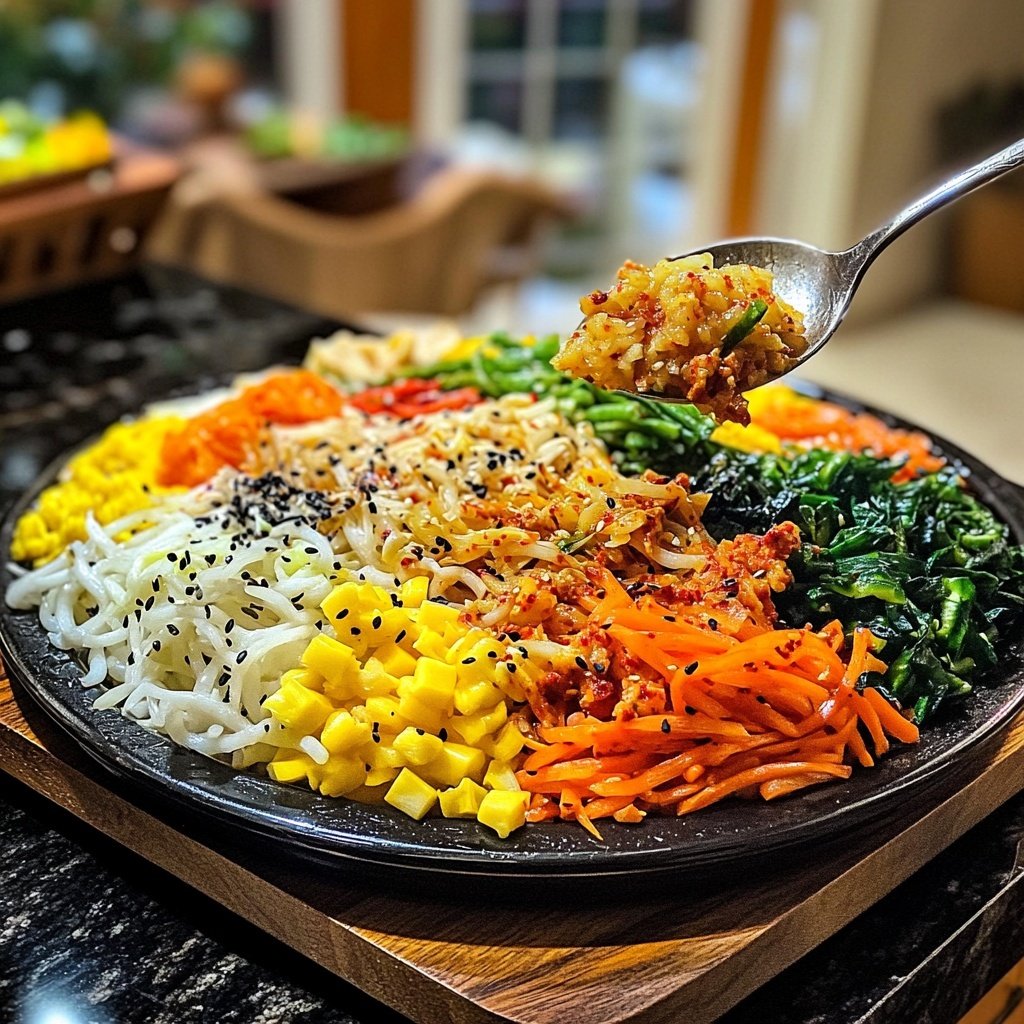
Korean Bibimbap is a beloved dish that showcases a harmonious blend of flavors and textures. This colorful rice bowl is not only a feast for the eyes but also a delight for the palate, making it a must-try for any food lover.
Why You Will Love This Recipe
- A harmonious mix of fresh vegetables and savory meats
- Customizable to suit your taste preferences and dietary needs
- A beautiful presentation that impresses at any gathering
The Beauty of Bibimbap
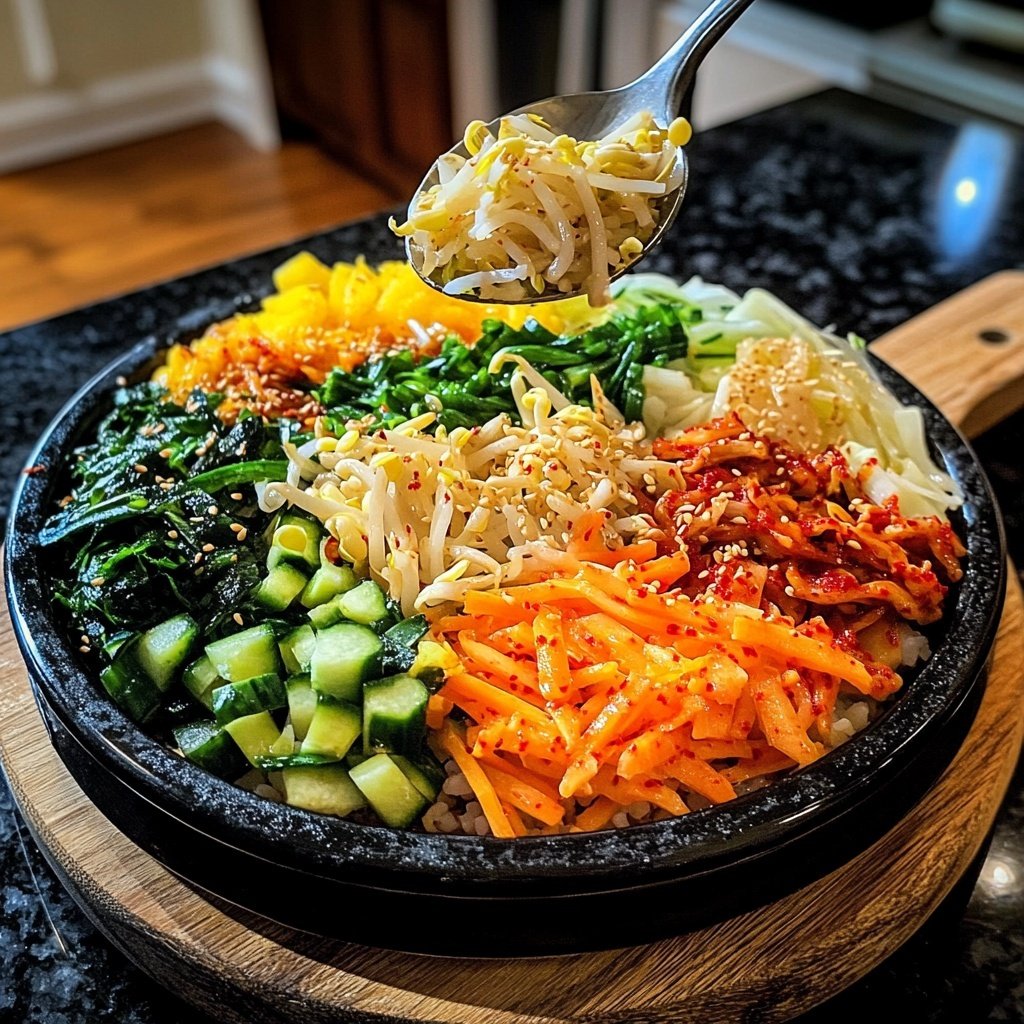
Bibimbap is not just a meal; it's a beautiful canvas of colors and textures that captivates the eye and delights the palate. Each ingredient plays a crucial role, contributing to the dish's overall harmony. The vibrant greens of spinach, the bright orange of carrots, and the rich, earthy tones of sautéed zucchini come together to create a feast for the senses.
This dish embodies the essence of Korean cuisine, which emphasizes balance and variety. Traditionally served in a hot stone bowl, the rice at the bottom develops a crispy layer, adding a delightful crunch to each bite. Bibimbap is not only nutritious but also visually stunning, making it a perfect centerpiece for any dining table.
Customizing Your Bibimbap
One of the best features of Bibimbap is its versatility. You can easily customize it to suit your dietary restrictions or personal preferences. While the classic version includes ground beef, feel free to swap it out for chicken, shrimp, or even a plant-based protein like tofu or tempeh. The vegetables can also be adjusted based on what you have on hand or what's in season, allowing for endless variations.
For those who prefer a milder flavor, the gochujang can be adjusted or omitted. Instead, you might want to serve it on the side, allowing each diner to control the spice level. This adaptability makes Bibimbap a fantastic option for gatherings, as everyone can create their own perfect bowl.
Health Benefits of Bibimbap
Bibimbap is not only delicious but also a wholesome choice for a meal. Packed with a diverse range of vegetables, this dish is rich in vitamins, minerals, and antioxidants. Incorporating a variety of colors in your meal, as seen in Bibimbap, is crucial for a balanced diet. Each vegetable contributes unique health benefits, from the iron in spinach to the fiber in bean sprouts.
Moreover, with lean protein options available, Bibimbap can be a satisfying and nutritious dish that supports a healthy lifestyle. It’s an excellent source of energy, making it a perfect meal for lunch or dinner. With the right ingredients, Bibimbap can be a low-calorie option that still fills you up, making it a guilt-free indulgence.
Ingredients
Gather all the ingredients before you start cooking to streamline the process.
Vegetables and Garnishes
- 2 cups cooked rice (preferably short-grain)
- 1 cup spinach, blanched
- 1 cup carrots, julienned
- 1 cup zucchini, julienned
- 1 cup bean sprouts, blanched
- 4 eggs, fried or poached
- Sesame seeds for garnish
- Green onions, sliced for garnish
Protein and Sauce
- 1 cup ground beef (or tofu for a vegetarian option)
- 2 tablespoons soy sauce
- 1 tablespoon sesame oil
- 2 tablespoons gochujang (Korean chili paste)
- 1 tablespoon sugar
- Salt and pepper to taste
Make sure to arrange the ingredients beautifully for a visually appealing dish.
Instructions
Follow these steps carefully to create a delicious Bibimbap.
Prepare the Rice and Vegetables
Start by cooking the rice according to package instructions. While the rice is cooking, prepare the vegetables by blanching the spinach and bean sprouts. Sauté the carrots and zucchini separately until tender.
Cook the Protein
In a pan, heat sesame oil and add the ground beef (or tofu). Season with soy sauce, sugar, salt, and pepper. Cook until browned and set aside.
Assemble the Bibimbap
In a large bowl, place a serving of rice at the bottom. Arrange the cooked vegetables and protein on top of the rice in sections. Add a fried or poached egg in the center.
Add the Sauce and Serve
Drizzle gochujang over the top and sprinkle with sesame seeds and sliced green onions. Mix everything together before eating for the best flavor!
Enjoy your homemade Bibimbap!
Pro Tips
- Feel free to customize the ingredients based on your preferences. Add more vegetables or switch proteins as desired.
Tips for Perfect Bibimbap
To achieve the perfect texture in your Bibimbap, consider using day-old rice. This rice is drier, which helps it fry beautifully in the pan, giving you that sought-after crispy layer when served in a hot stone bowl. If you don’t have day-old rice on hand, just make sure to cool your freshly cooked rice thoroughly before using it in this recipe.
Don’t forget to season your vegetables as you prepare them. A pinch of salt or a dash of soy sauce can enhance their flavors significantly. Sautéing them separately ensures that each vegetable retains its unique taste and texture, allowing for a more complex flavor profile.
Serving Suggestions
Bibimbap is often enjoyed as a standalone dish, but it pairs wonderfully with various side dishes known as banchan. Consider serving it with pickled vegetables, kimchi, or a light seaweed salad for a complete meal experience. These side dishes not only complement the main dish but also enhance the overall flavor journey.
For a family-style meal, serve all components separately, allowing everyone to create their own Bibimbap bowls. This interactive dining experience can be fun and encourages creativity, making it perfect for gatherings or casual dinners.
Questions About Recipes
→ Can I make Bibimbap vegetarian?
Yes, simply replace the meat with tofu and use vegetable-based sauces.
→ What type of rice is best for Bibimbap?
Short-grain rice is traditionally used, as it is sticky and holds together well.
→ Can I prepare the ingredients in advance?
Absolutely! You can pre-cook the vegetables, rice, and protein to save time.
→ How spicy is Bibimbap?
The spice level can be adjusted by varying the amount of gochujang used.
Korean Bibimbap
Created by: Delaney Brooks
Recipe Type: Authentic Meals
Skill Level: Intermediate
Final Quantity: 4 servings
What You'll Need
Vegetables and Garnishes
- 2 cups cooked rice (preferably short-grain)
- 1 cup spinach, blanched
- 1 cup carrots, julienned
- 1 cup zucchini, julienned
- 1 cup bean sprouts, blanched
- 4 eggs, fried or poached
- Sesame seeds for garnish
- Green onions, sliced for garnish
Protein and Sauce
- 1 cup ground beef (or tofu for a vegetarian option)
- 2 tablespoons soy sauce
- 1 tablespoon sesame oil
- 2 tablespoons gochujang (Korean chili paste)
- 1 tablespoon sugar
- Salt and pepper to taste
How-To Steps
Start by cooking the rice according to package instructions. While the rice is cooking, prepare the vegetables by blanching the spinach and bean sprouts. Sauté the carrots and zucchini separately until tender.
In a pan, heat sesame oil and add the ground beef (or tofu). Season with soy sauce, sugar, salt, and pepper. Cook until browned and set aside.
In a large bowl, place a serving of rice at the bottom. Arrange the cooked vegetables and protein on top of the rice in sections. Add a fried or poached egg in the center.
Drizzle gochujang over the top and sprinkle with sesame seeds and sliced green onions. Mix everything together before eating for the best flavor!
Extra Tips
- Feel free to customize the ingredients based on your preferences. Add more vegetables or switch proteins as desired.
Nutritional Breakdown (Per Serving)
- Calories: 500 kcal
- Total Fat: 20g
- Saturated Fat: 5g
- Cholesterol: 195mg
- Sodium: 700mg
- Total Carbohydrates: 66g
- Dietary Fiber: 5g
- Sugars: 5g
- Protein: 20g